
Oceanic Pacific Services

Our Work
At Oceanic Pacific Services LLC (OPS), our work is grounded in science, guided by culture, and driven by impact. Through environmental assessments, marine monitoring, and community-centered collaboration, we support sustainable development across Pacific Island nations and beyond.
This section features projects led by our team - both through OPS and through academic research conducted by our founder during undergraduate and doctoral studies at Brigham Young University in Hawai'i and Utah. These case studies reflect our expertise, values, and commitment to bridging Western science and Indigenous knowledge to promote environmental resilience throughout the Pacific.

Publications
Segi, T. T., & Gill, R. A. (2026). Indigenous fishponds are sediment traps for terrigenous sediment on the southern coast of Moloka'i, Hawaii. Journal of Sea Research, 102671. (Link)
Segi, Tavailau T., (2024). "E Afua Mai Mauga Manuia o Nu'u: Conservation from Mountains to Reefs in Tropical Pacific Islands". Theses and Dissertations. 10835. (Link)
Cassinat, J. J., Cassinat, K. C., Segi, T., Tavana, N. G., & Gill, R. A. (2022). Traditional village roles and gender shape Samoan perceptions of climate change. Current Research in Environmental Sustainability, 4, 100173. (Link)

01
Moloka'i Reef Complexity Survey
As part of his doctoral research, OPS founder Tava'ilau Segi led a study examining how wave exposure influences reef structural complexity, coral cover, and fish diversity along the Southern coast of Moloka'i. The project combined in photo-transect surveys, surface vehicle surveys, geomorphology mapping, and statistical analysis. Results showed that sturcturally complex reef sites often shaped by wave dynamics supported greater biodiversity. These findings contribute to improve reef monitoring strategies and inform the design of more conservation areas.
Core Expertise:
-
Marine & Coastal Monitoring
-
Reef Complexity and Biodiversity Assessment
-
Benthic Mapping
-
Data Analysis & Visualization
02
Sediment Retention by Traditional Hawaiian Fishponds
This study explored how traditional Hawaiian fishponds (loko i'a) influence sediment distribution along the southeast Moloka'i coastline. Conducted by OPS founder Tava'ilau Segi during doctoral research at Brigham Young University - Provo, the project combined water and sediment sampling with GIS and spatial interpolation techniques. The findings suggest that restored and functioning fishponds can serve as sediment traps, potentially protecting nearshore coral reefs from upland runoff. This research supports the ecological value of Indigenous aquaculture systems in modern conservation planning.
Core Expertise:
-
Marine & Coastal Monitoring
-
Sediment Sampling & Analysis
-
Indigenous Collaboration & Knowledge Integration
-
GIS & Spatial Interpolation


03
Erosion Risk and Land-Use Change in Savai'i, Samoa
This project assessed how land-cover changes impact soil erosion across the east coast of Savai'i, Samoa's largest island. Conducted by OPS founder Tava'ilau Segi during his doctoral research, the study used high-resolution satellite imagery and ArcGIS Pro to implement the Revised Universal Soil Loss Equation (RUSLE) and identify erosion-prone areas, Outputs from the model highlighted sediment loss patterns across different land uses and slopes within watersheds, informing conservation planning and land-use policy. The work supports sustainable upland management to reduce downstream impacts on coastal ecosystems.
Core Expertise:
-
Geospatial & Remote Sensing Solutions (QGIS, eCognition)
-
Soil Erosion Modeling (ArcGIS)
-
Sustainable Land-Use Planning
-
Climate Resilience Assessment
04
Community-Led Conservation Center in Saipipi, Savai'i, Samoa
This project supported the development of a community conservation center in Saipipi Village, funded by Seacology and Brigham Young University to strengthen local marine and forest conservation efforts. OPS founder Tava'ilau Segi played a key role in co-writing the successful grant proposal on behalf of the Saipipi Conservation Committee, securing funds to construct the center and expand community-based conservation initiatives.
Tava'ilau also contributed to designing culturally relevant educational materials, integrating Indigenous ecological knowledge with scientific research to support your engagement and public awareness. Additionally, he coordinated the logistics for outfitting the center, including assembling and shipping a container with furnishing and supplies from Utah.
The conservation center now serves as a hub for education, outreach, and stewardship, helping the community protect vital natural resources for future generations.
Core Expertise:
-
Indigenous Collaboration & Knowledge Bridging
-
Grant Writing & Proposal Development
-
Environmental Education
-
Conservation Logistics & Program

05
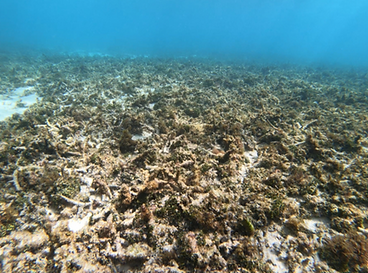
Marine Biodiversity Surveys in Saipan, Northern Mariana Islands
As Part of a collaborative research initiatives between BYU-Hawai'i and the Division of Fish and Wildlife in Saipan, Tava'ilau Segi contributed to comprehensive surveys of coral reef ecosystems in the Western Pacific. The project involved underwater visual census methods to assess fish abundance, invertebrate diversity, and coral health across multiple sites. Working alongside a multidisciplinary teams of students and faculty, Tava'ilau helped document ecological baselines for long-term conservation and resource management in the region. His contribution supported data collection, species identification, and public science outreach.
Core Expertise:
-
Marine & Coastal Monitoring
-
Reef Fish and Invertebrate Surveys
-
Ecological Baseline Assessments
-
Cross-Cultural Scientific Collaboration